

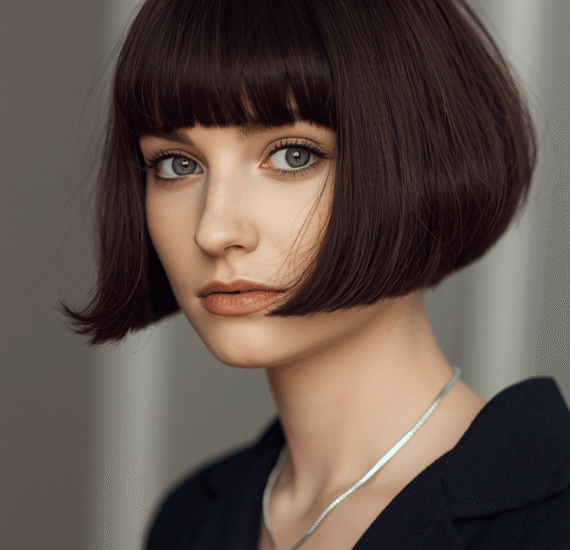
Fine hair requires a different haircut strategy than thick hair. The wrong cut makes fine hair look thinner and limp. The right cut adds movement, texture, and the illusion of volume.
These haircuts work specifically for fine hair. They’re designed to maximize what you have, not fight it.
What Fine Hair Needs
Fine hair characteristics:
- Thin strands (not necessarily thin density)
- Gets weighed down easily
- Falls flat without product
- Looks limp when too long
- Breaks easily if handled roughly
What works for fine hair:
- Shorter lengths (shoulder-length or above)
- Lots of layers (creates movement)
- Texture and choppy ends (more forgiving)
- Strategic thinning (removes weight without looking sparse)
- Shorter, blunt-cut bangs (add shape)
What doesn’t work:
- Long, blunt, one-length hair (emphasizes thinness)
- Heavy layers that thin too much (looks see-through)
- Requiring constant styling (fine hair breaks with manipulation)
- Too many layers (creates flyaways)
Cut 1: Textured Bob
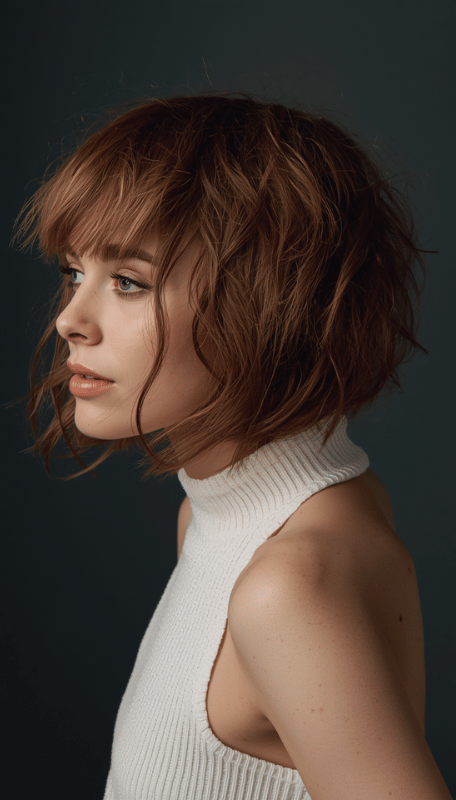
Length: Chin-length | Styling: 5 minutes | Best for: Fine, straight to wavy hair
A textured bob has choppy, uneven layers that create movement without bulk.
Why it works:
Choppy ends catch light and create dimension. The bob keeps hair contained so it doesn’t get weighed down. Layers prevent that flat, lank look.
How to style:
- Apply texturizing spray to damp hair
- Blow dry with a round brush, flipping your head for volume
- Tousle with fingers
- Done
Ask your stylist:
“I want a chin-length bob with choppy, textured layers throughout. I want movement, not bluntness. Please thin the ends so they’re piece-y.”
Cut 2: Layered Pixie
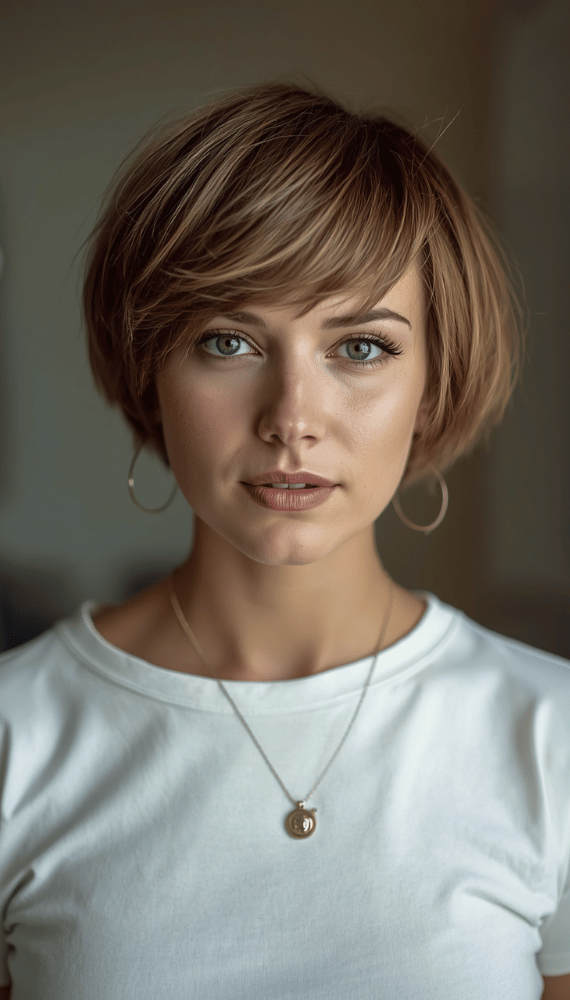
Length: 1-3 inches | Styling: 2 minutes | Best for: Fine hair that needs low-maintenance
A pixie is the shortest option, but layers add texture so it doesn’t look flat.
Why it works:
Short hair can’t get weighed down. Layers create texture on a small scale. Pixies require minimal styling and look intentional on fine hair.
How to style:
- Apply texturizing spray to damp hair
- Blow dry with fingers, pushing for volume
- Tousle with fingers
- Done
Ask your stylist:
“I want a short pixie cut with lots of layers for texture. Please don’t make it too neat – I want it to look piecy and textured.”
Cut 3: Shag
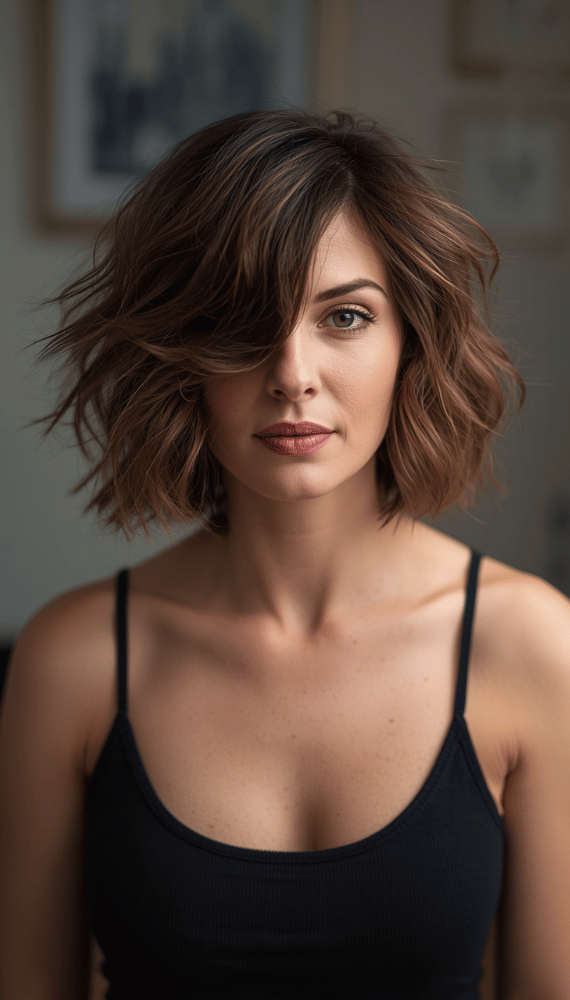
Length: Shoulder-length or shorter | Styling: 5 minutes | Best for: Wavy or curly fine hair
A shag is layered throughout, creating movement and texture on every level.
Why it works:
Shags are designed for movement. Multiple layers throughout means no single layer gets too heavy. Works beautifully on fine, textured hair.
How to style:
- Apply texturizing spray to damp hair
- Blow dry with a diffuser (if you have waves/curls) or round brush
- Tousle with fingers
- Done
Ask your stylist:
“I want a modern shag cut with lots of choppy layers. I want movement and texture throughout. Please keep it looking effortless, not neat.”
Cut 4: Choppy Layers
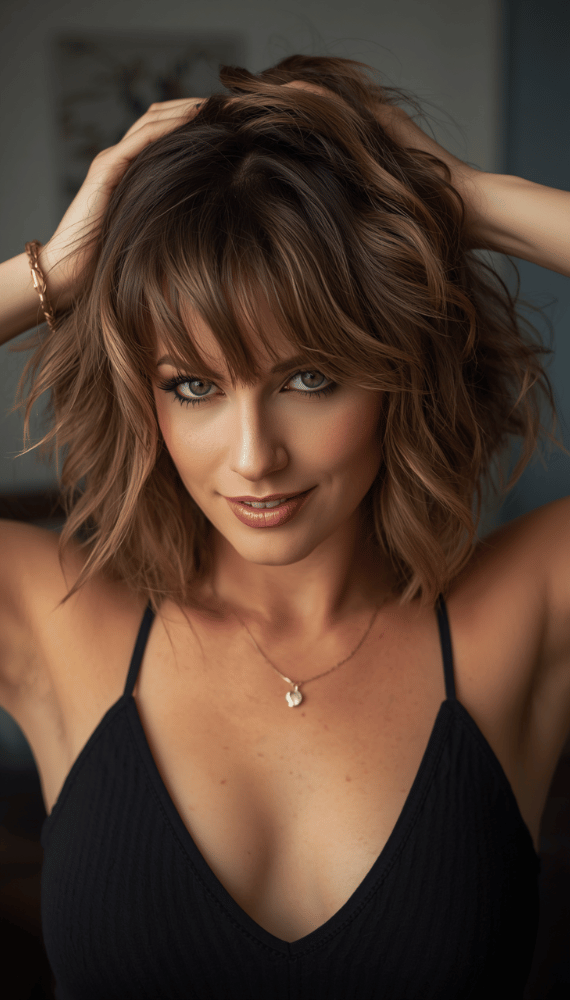
Length: Shoulder-length | Styling: 5-7 minutes | Best for: All fine hair types**
Choppy layers throughout create movement without requiring a specific length.
Why it works:
Choppy layers are forgiving. They hide imperfections and create texture naturally. Fine hair looks thicker with strategic layers.
How to style:
- Apply texturizing or volumizing spray to damp hair
- Blow dry with a round brush, flipping your head
- Curl the ends slightly with a curling wand (optional, adds texture)
- Tousle with fingers
- Done
Ask your stylist:
“I want choppy layers throughout that create movement. Please don’t thin too much – I want texture, not see-through sections.”
Cut 5: Blunt Bob with Bangs
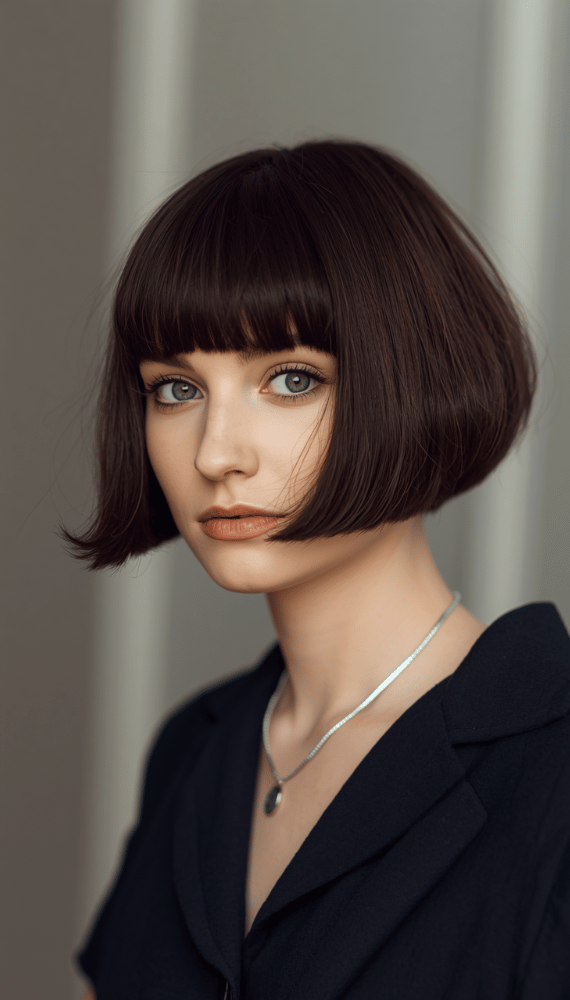
Blunt Bob with Bangs
Length: Chin-length | Styling: 5 minutes | Best for: Straight to slightly wavy fine hair
A blunt bob with bangs creates the illusion of fullness and frames the face.
Why it works:
Blunt ends look more substantial than choppy ends. Bangs add shape and make hair look fuller at the crown. The bob structure is flattering on fine hair.
How to style:
- Blow dry with a round brush
- Use a flat iron to smooth if needed (one pass, not rough)
- Tousle gently with fingers
- Done
Ask your stylist:
“I want a blunt bob at chin-length with blunt bangs. I want it to look clean and intentional. Please don’t make it too severe – I want some movement.”
Cut 6: Modern Mullet
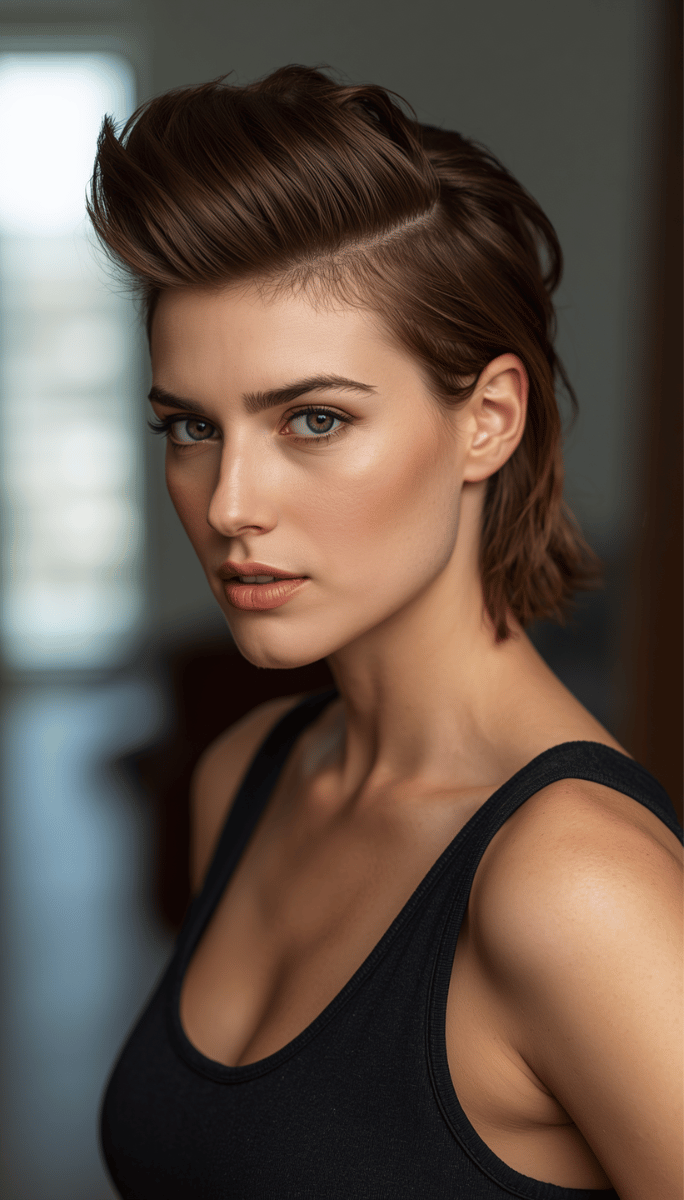
Length: Short on top, slightly longer in back | Styling: 5 minutes | Best for: Fine hair that needs low-maintenance with edge
A modern mullet is shorter on top (for volume) and slightly longer in back (for movement).
Why it works:
Short on top prevents weight at the crown. Longer in back creates visual interest. The contrast is flattering and modern.
How to style:
- Apply texturizing spray to damp hair
- Blow dry with fingers, pushing up at the crown
- Tousle the longer pieces in back
- Done
Ask your stylist:
“I want a modern mullet – shorter and textured on top with choppy layers, longer and piece-y in back. I want it to look effortless.”
Cut 7: Wolf Cut
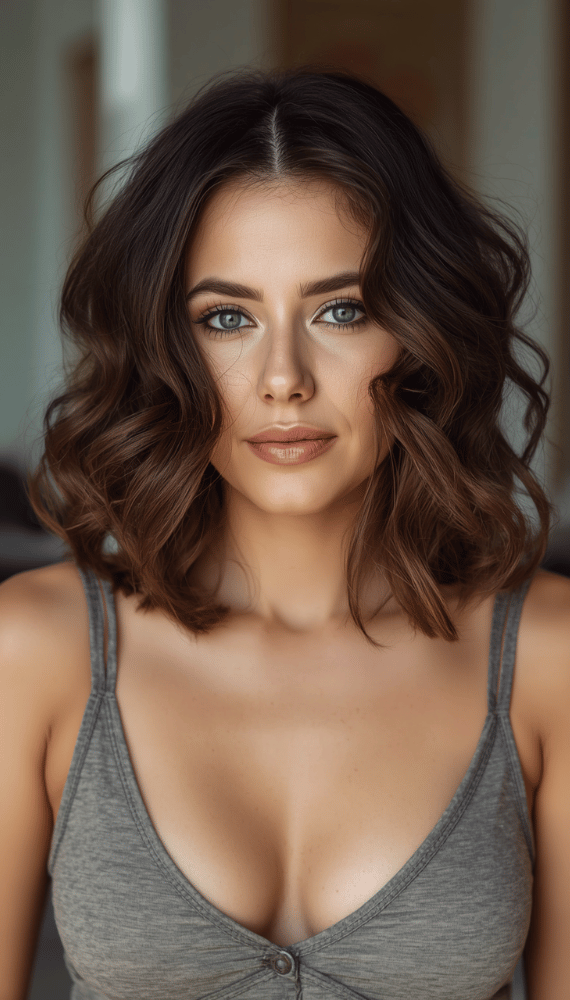
Length: Shoulder-length | Styling: 5-7 minutes | Best for: Wavy or curly fine hair
A wolf cut is a hybrid of a shag and a mullet – short, textured layers on top with longer, moveable layers underneath.
Why it works:
The short top creates volume at the crown. Longer underneath creates movement and length. Works beautifully on textured fine hair.
How to style:
- Apply texturizing or curl cream to damp hair
- Blow dry with a diffuser (to encourage waves) or round brush
- Tousle with fingers
- Done
Ask your stylist:
“I want a wolf cut – shorter, choppy layers on top with longer, piece-y layers underneath. I want movement and texture throughout.”
Cut 8: Textured Lob
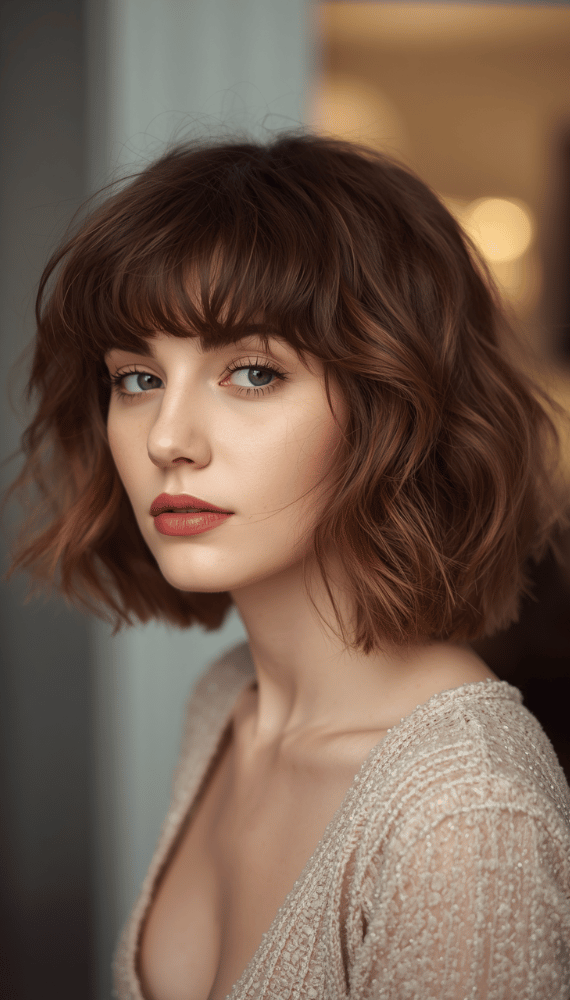
Length: Shoulder to mid-back | Styling: 5-10 minutes | Best for: Fine hair with some wave or curl
A lob (long bob) with lots of texture and layers works on fine hair if it’s cut correctly.
Why it works:
Layers throughout prevent weight. Texture adds movement. A lob gives you length without sacrificing volume at the crown.
How to style:
- Apply texturizing spray to damp hair
- Blow dry with a round brush, focusing on the roots for volume
- Curl the ends with a curling wand (optional)
- Tousle with fingers
- Done
Ask your stylist:
“I want a lob with lots of choppy, textured layers throughout. I want movement at the ends and volume at the crown. Please thin strategically so it doesn’t look stringy.”
Cut 9: Feathered Layers
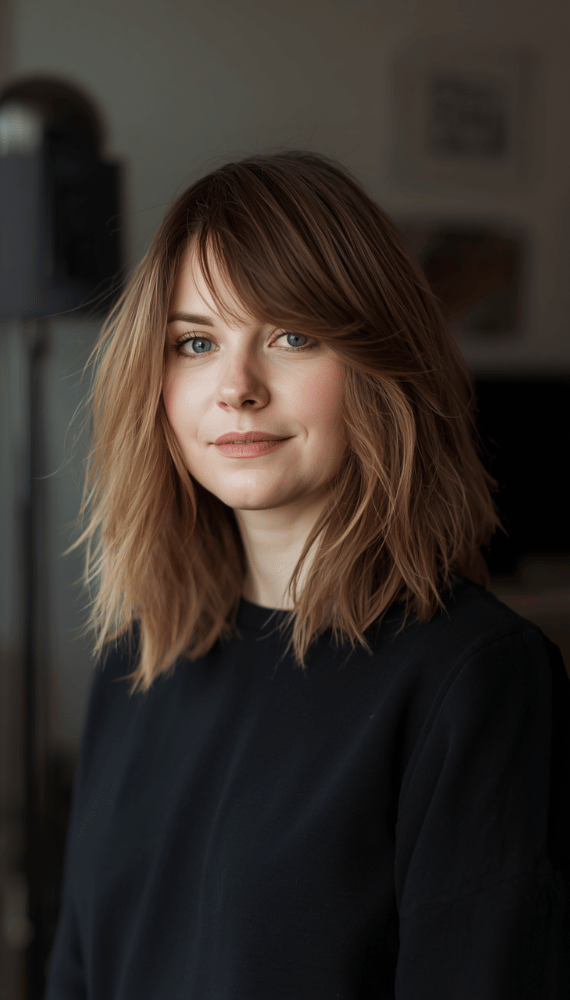
Length: Shoulder-length or shorter | Styling: 5 minutes | Best for: Fine, straight hair
Feathered layers are soft, piece-y layers that create movement without choppy texture.
Why it works:
Feathered layers are lighter and more blended than choppy layers. They work on straight fine hair without looking too textured or scene-like.
How to style:
- Blow dry with a round brush
- Tousle gently with fingers
- Use a texturizing spray if needed
- Done
Ask your stylist:
“I want feathered layers that create soft movement. I want them blended, not choppy. The goal is dimension without texture.”
Cut 10: Short Undercut
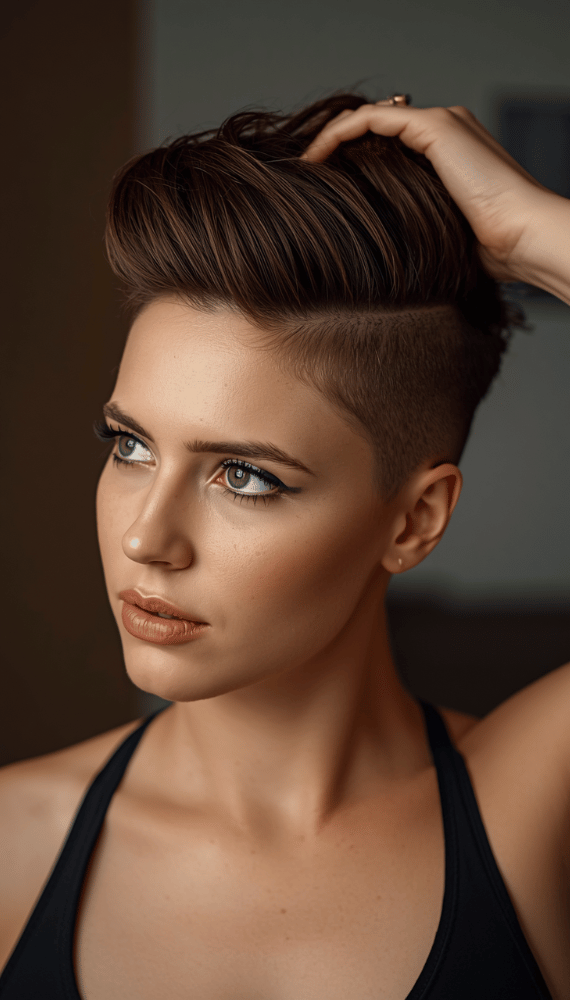
Length: 2-4 inches on top, shorter undercut | Styling: 3 minutes | Best for: Fine hair that needs edge and low-maintenance
An undercut has short sides/back with longer, textured layers on top.
Why it works:
Short sides prevent weight. Longer top can be textured for movement. Minimal styling required. Very modern.
How to style:
- Apply texturizing spray to damp hair
- Blow dry with fingers, pushing up at the crown
- Tousle
- Done
Ask your stylist:
“I want an undercut with textured, choppy layers on top. I want volume at the crown and the undercut to be clean. Please make the top piece-y and moveable.”
What to Tell Your Stylist
Key phrases for fine hair cuts:
- “I want lots of layers to create movement”
- “I want texture and choppy ends, not blunt”
- “I want volume at the crown”
- “Please thin strategically so it doesn’t look see-through”
- “I don’t want a heavy, one-length cut”
- “I want low-maintenance styling”
- “I want it to look effortless, not neat”
Bring pictures. Show your stylist 2-3 cuts you like. Communication prevents mistakes.
Styling Tips
For fine hair haircuts:
Texturizing spray is your best friend
- Adds grip so styles hold
- Adds texture and volume
- Makes fine hair look thicker
- Costs $8-12
Volumizing mousse
- Apply to damp roots before blow drying
- Creates lift and body
- Makes fine hair look fuller
- Costs $8-15
Don’t over-manipulate
- Fine hair breaks easily
- Blow dry gently, don’t rough it up
- Use a comb, not a brush (when wet)
- Minimize heat damage
Shorter is better
- Longer hair gets weighed down
- Shoulder-length or shorter is optimal for fine hair
- Grow it out once, then commit to maintenance cuts
Wrap-up
Haircuts for fine hair work when you embrace movement over length. Short, textured, layered cuts with minimal styling look better on fine hair than long, blunt cuts that require constant work.
Pick a cut that matches your lifestyle. Commit to getting trims every 6-8 weeks (fine hair shows growth and damage faster). Style with texture, not against it.
Your fine hair is an asset when cut correctly. Use it.
Related:
Everyday Hairstyles for Long Hair: 10 Styles You Can Do in 5 Minutes
Heatless Hairstyles for Bed Head Mornings: 10 Styles That Look Intentional

[…] Haircuts for Fine Hair: The Best Styles That Add Volume and Movement […]